Flora Ackroyd's financial dependence and inheritance
The Murder of Roger AckroydFlora Ackroyd’s financial dependence and inheritance define a sharp change in her circumstances: while Roger Ackroyd was alive, she and her mother relied on his reluctant support; after his death, Flora learns that he has left her £20,000. To Flora, the legacy means freedom from the humiliations and compromises of dependence, but the story also shows how money had shaped her choices and relationships before she received it.
Dependence on Roger Ackroyd
Roger did not give Flora a regular allowance. As her mother explains, he paid Flora’s bills, but reluctantly and with questions about what she needed. Flora and her mother therefore had little money they could regard as their own. The household’s dependence was tangible in small economies as well as larger ones: Mrs. Ackroyd complains that Roger would not even replace worn face towels.
That dependence constrained Flora’s dignity and made her resentful, despite her devotion to her uncle. Her mother argues that Roger’s money should have been left to her, as Flora’s mother, rather than directly to Flora, and interprets the decision as a lack of trust. Beneath the family’s claims about who deserved the money lies a more basic imbalance: Roger controlled the resources on which both women depended.
The legacy as freedom
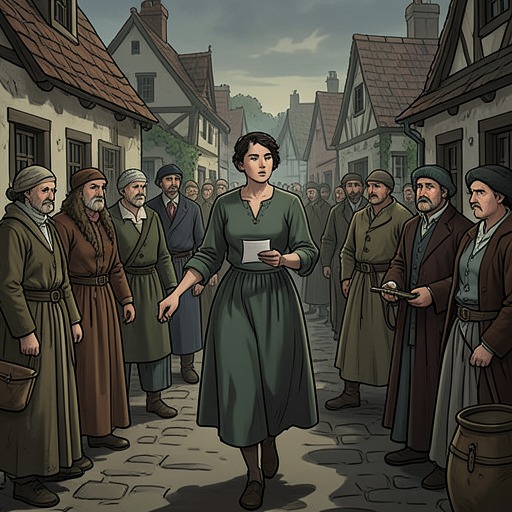
When Mr. Hammond tells Flora about the will, she bursts out with the news that Roger has left her £20,000. She describes the sum as everything to her: freedom, life, and an end to the need for scheming, scraping, and lying. Her sudden happiness is set against her earlier material insecurity, not merely against the shock of receiving an inheritance.
Flora explains that dependence meant having to pretend gratitude for cast-off clothes supplied by wealthy relations: last year’s coat, skirts, and hats. She admits in a low voice that maintaining appearances cost her something. The inheritance promises an end to that performance and the ability to choose what to do without relying on another person’s generosity. When she begins to say she is free not to do something, she stops herself; the unfinished thought leaves the full extent of the constraint unstated, even as her relief is unmistakable.
Money, marriage, and concealment
Flora’s financial position is part of the background to her engagement to Ralph Paton. Roger wanted Ralph to marry her, and after refusing to pay Ralph’s debts, he presented the marriage as his wish. Flora accepted the arrangement for the liberty, money, and wider prospects it seemed to offer; the account describes the engagement as a business arrangement rather than a love match. For Flora, then, the prospect of money had already been bound up with a possible escape from dependence before the will transferred Roger’s fortune to her outright.
The inheritance changes that equation. The money she expected to gain through the marriage is now hers by bequest, giving her an independent resource instead of leaving her future tied to Roger’s plans for the engagement. Its significance is therefore both practical and relational: the legacy releases Flora from one form of dependence, while revealing how economic insecurity had made even marriage appear a route to freedom.